
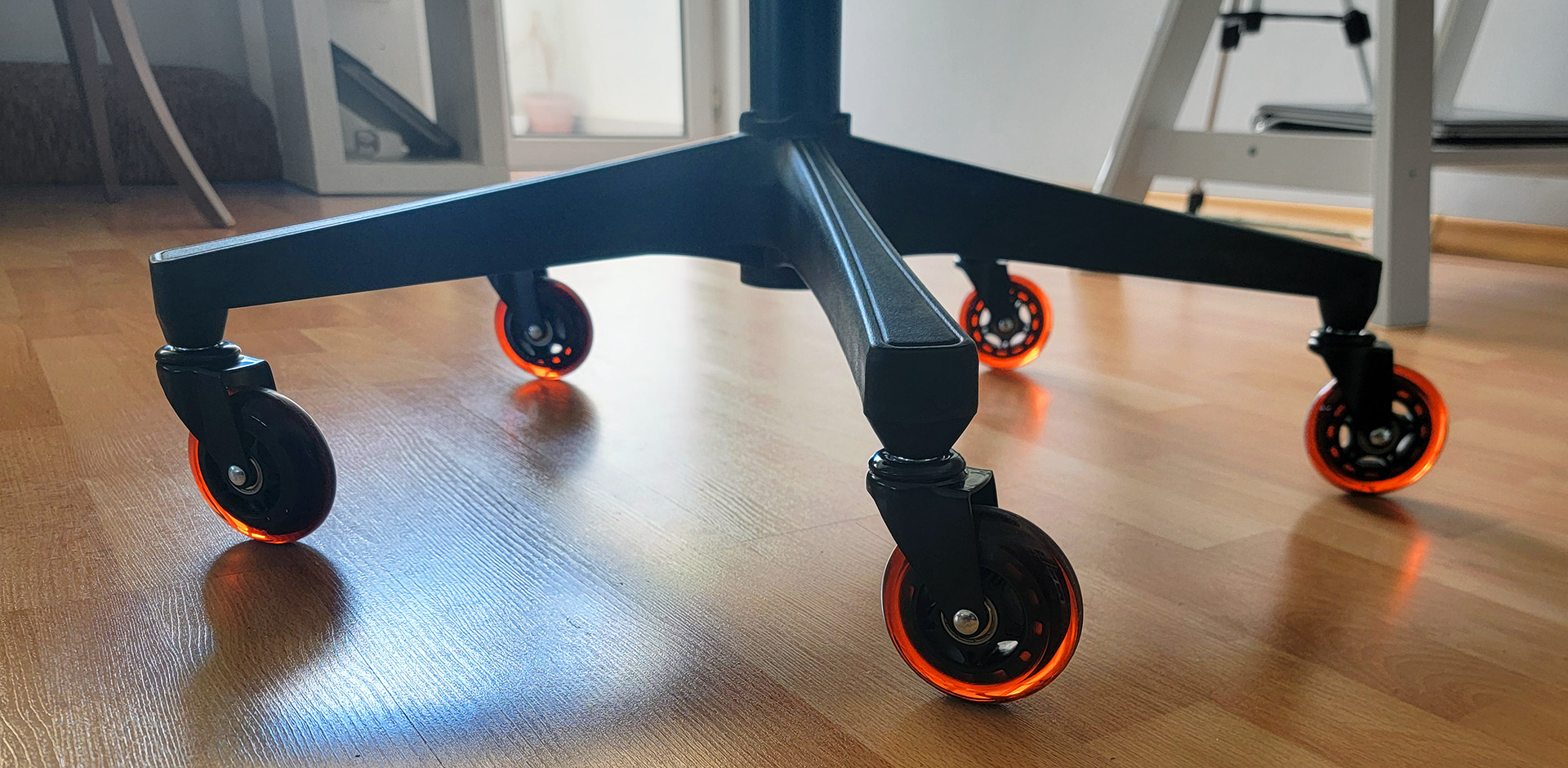
The modern workspace has evolved dramatically, blending high-performance technology with ergonomic furniture to support long hours of productivity and gaming. Yet, amid the investments in lumbar support, standing desks, and multi-monitor setups, one fundamental component is frequently overlooked: the chair wheels. Standard plastic casters, while ubiquitous, often introduce a host of subtle frustrations, from damaged flooring to distracting noise.
This review examines the Quiet Swivel Casters – Heavy Duty, Anti-Scratch, Noiseless Wheels, designed as an aftermarket replacement for office and gaming chairs. Based on our hands-on experience, product specifications, material science, and aggregated user feedback from extensive marketplaces, we will objectively analyze how these silent castors perform, who they benefit, and whether they represent a sound investment for workspace optimization.
The Evolution of Chair Wheels
From Standard Nylon to Polyurethane
To understand the utility of these replacement swivel casters, it is necessary to examine the baseline. The vast majority of office and gaming chairs are shipped with twin-wheel nylon casters. These standard wheels are inexpensive to manufacture and adequately support the weight of the user, but they come with inherent limitations. Nylon is a hard, unforgiving plastic. When rolled across solid surfaces, it grinds trapped dirt and debris directly into the floor, leading to scratches, scuffs, and permanent damage over time. Furthermore, the twin-wheel design often creates a scraping sound and provides significant rolling resistance, requiring the user to exert force to micro-adjust their seating position.
The Quiet Swivel Casters feature a completely different design borrowed from inline skates. Instead of dual hard plastic wheels, these have a single, solid polyurethane (PU) wheel housing high-grade steel ball bearings. Polyurethane is a unique elastomer that combines the durability of hard plastic with the shock-absorbing properties of rubber. This material shift is the core driver behind the “anti-scratch” and “noiseless” claims.
Core Specifications
and Build Quality
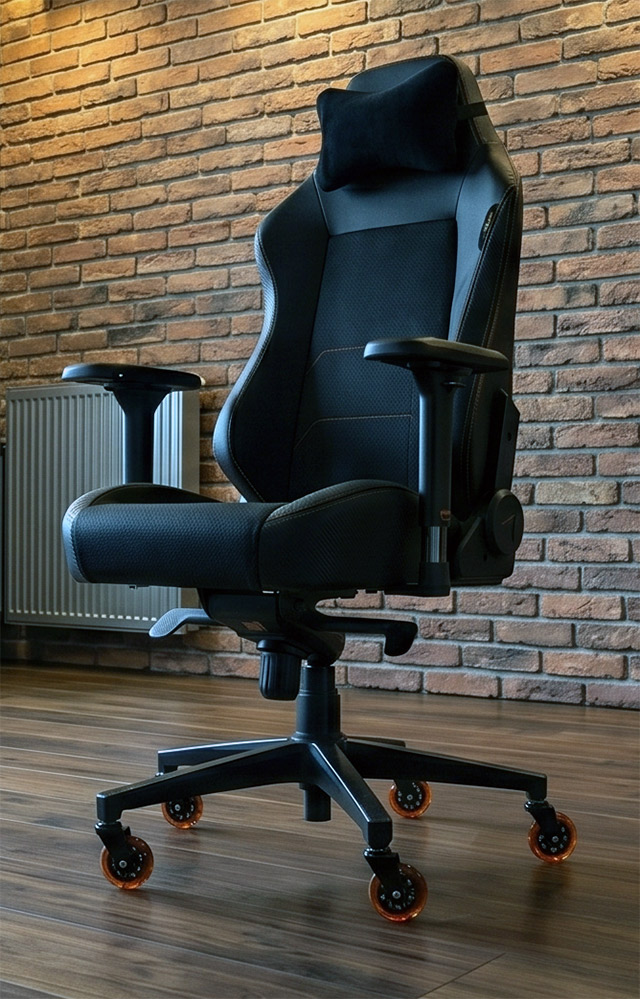
When evaluating any hardware meant for daily use, the structural integrity of the components is paramount. These chair wheels are built to handle sustained friction and substantial weight.
Material Composition The outer tire of the caster is molded from clear or tinted polyurethane. This material does not degrade easily under friction and resists picking up large abrasive particles. The core of the wheel is typically reinforced with a rigid polycarbonate to maintain structural shape under load.
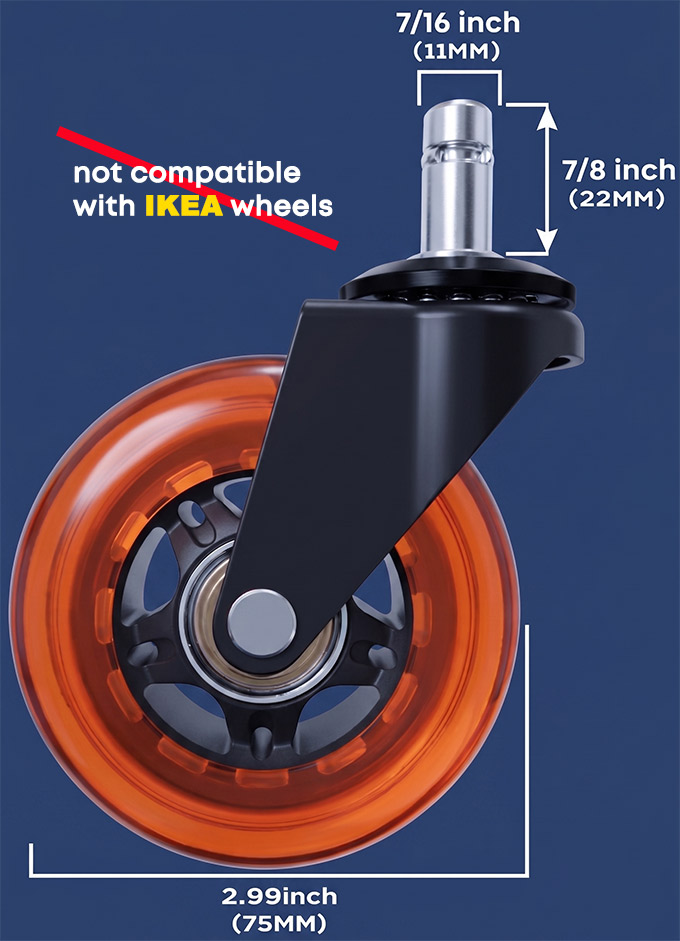
The Bracket and Stem The mounting bracket is constructed from solid steel, moving away from the plastic housings found in standard casters. This steel bracket houses the precision ball bearings that allow for the 360-degree swivel motion. The standard stem size is 11mm (7/16″) in diameter and 22mm (7/8″) in length, which is universally compatible with approximately 95% of office chairs on the market (with the notable exception of specific brands like IKEA, which utilize a 10mm stem).
Load Capacity A standard set of five heavy-duty swivel castors is engineered to support upward of 650 pounds (approx. 295 kg) collectively. This high load rating ensures that the wheels will not deform or warp under the weight of heavier ergonomic chairs, solid metal gaming chairs, or the users themselves.
Performance Across Floor Types
The primary marketing claim of these silent castors is their safety on all floor types. Based on mechanical properties and user feedback, here is an objective breakdown of their performance across various surfaces.
Hardwood and Laminate
This is where the polyurethane material excels. Hardwood floors are notoriously susceptible to scratching from standard nylon wheels. The soft PU material of these replacement wheels glides smoothly over the wood without leaving indentations or micro-scratches. The shock-absorbing nature of the wheels also means that rolling over minor imperfections or seams in the wood does not create a clattering sound.
Tile and Stone
Tile floors present a unique challenge for chair wheels because of the grout lines. Standard twin-wheel casters frequently get caught in grout depressions, requiring the user to forcefully push the chair to gain momentum, which can damage the wheel housing over time. The 3-inch diameter of these rollerblade-style wheels is large enough to roll seamlessly over most standard grout lines without dipping, providing a continuous, uninterrupted glide.
Low-Pile to Medium-Pile Carpet
On low-pile office carpets, these swivel castors perform efficiently. The single-wheel design cuts through the carpet fibers with less resistance than a wide, flat nylon wheel. Users report that micro-adjusting their position at their desk requires significantly less physical effort.
High-Pile and Plush Carpet
Performance on thick, plush carpets is more nuanced. While the large 3-inch diameter helps the wheel navigate the fibers, the narrow profile of the single wheel can cause it to sink deeper into the carpet padding than a broader twin-wheel design. While they still function, the rolling resistance increases on very deep carpets, and users with thick shag rugs may not experience the same effortless glide found on solid surfaces.
The Acoustic Impact
The Reality of Silent Castors
In shared office environments, recording studios, or late-night gaming setups, acoustic management is a tangible concern. The hard plastic wheels rolling over a hard floor act as acoustic amplifiers, generating a low-frequency rumble and a high-frequency scraping noise.
The Quiet Swivel Casters address this through two mechanisms. First, the soft polyurethane tire dampens the impact against the floor, effectively absorbing the vibrations that cause the low-frequency rumble. Second, the precision steel ball bearings enclosed in the swivel mechanism and the wheel axle provide a friction-reduced rotation.
Analyzing user feedback reveals that the noise reduction is substantial. Many users note that the sound of moving the chair shifts from a noticeable “grind” to a soft, almost imperceptible “whisper.” For content creators, podcasters, and those sharing a workspace with sensitive microphones or sleeping family members, this acoustic reduction is a highly functional upgrade.
Economic and Aesthetic Implications
The End of the Chair Mat
A secondary but highly relevant consideration in evaluating these chair wheels is their impact on the broader workspace setup—specifically, the necessity of the plastic chair mat.
Historically, the solution to protecting floors from nylon wheels has been to purchase a clear plastic or polycarbonate floor mat. These mats present several issues:
- Cost: A durable chair mat can be an ongoing expense, as they frequently crack, yellow, or warp over time, requiring replacement.
- Aesthetics: Plastic mats disrupt the visual flow of a room, covering up expensive hardwood or custom rugs with a utilitarian sheet of plastic.
- Maintenance: Dirt and debris inevitably find their way under the mat, grinding into the floor surface and requiring constant cleaning.
By installing anti-scratch swivel castors, the necessity for a protective mat is largely eliminated. The wheels themselves serve the protective function. From an economic standpoint, replacing the casters is generally a one-time investment that offsets the recurring cost of floor mats, resulting in a cleaner, more minimalist workspace aesthetic.
Chair Castor Replacement
The Installation Process
A common barrier to chair repair or modification is the perceived complexity of the task. However, the chair castor replacement process for these specific wheels requires no specialized tools or technical expertise.
The stem of a standard chair wheel is held in place by a small friction ring (a C-ring) at the top of the metal post. To perform the replacement:
- Turn the office or gaming chair onto its side or back to expose the wheelbase.
- Grip the existing wheel firmly and pull straight outward. The friction ring will compress, and the wheel will pop out of the socket. (If the old wheel is stubbornly stuck due to rust or debris, a flathead screwdriver can be used for leverage).
- Take the new swivel castor and align the metal stem with the socket in the chair base.
- Push the new caster firmly into the socket until the friction ring clicks into place, ensuring the wheel sits flush against the base.
This accessibility makes it an efficient upgrade that can be completed in minutes, extending the life of the chair and improving its functionality without requiring professional service.
Aggregated Pros and Cons
from User Feedback
To provide an objective review, it is necessary to look beyond the manufacturer’s specifications or our own experience and analyze how the product performs in long-term, real-world scenarios. Based on a wide aggregation of user comments and reviews from major marketplaces, several distinct trends emerge.
The Advantages Noted by Users
- Smoothness of Glide: The most frequently mentioned benefit is the drastic reduction in rolling resistance. Users note that moving across the office feels effortless, requiring only a slight shift in body weight rather than a push with the legs.
- Floor Preservation: Long-term reviews consistently highlight the absence of new floor damage. Users who have utilized the wheels for multiple years on hardwood and laminate report no scuffing or grooving.
- Build Quality: The steel bracket construction is frequently praised. Heavy users note that standard plastic casters tend to snap or warp under pressure, whereas the steel housings of these rollerblade wheels maintain their structural integrity.
- Hair and Debris Resistance: Standard twin-wheel casters are notorious for accumulating pet hair and carpet fibers in their axles, eventually seizing up. The open-axle design of the single-wheel castors makes them significantly easier to clean and less prone to jamming.
The Drawbacks and Considerations Noted by Users
- The “Too Smooth” Factor: Interestingly, the primary drawback noted by a segment of users is that the wheels roll too easily. If a workspace floor is not perfectly level, the chair may slowly drift away from the desk when the user is not actively holding themselves in place.
- Increased Chair Height: Because these wheels are 3 inches in diameter (compared to the standard 2-inch nylon wheels), they raise the overall height of the chair by approximately one inch. For users who already have their chair at the lowest setting to accommodate a low desk or specific ergonomic posture, this extra inch can alter their seating geometry.
- Barefoot Safety: A minor but recurrent note in user feedback is that rolling over a bare toe with a solid polyurethane wheel is more painful than with a lightweight plastic wheel due to the concentrated weight distribution.
The Role of Chair Repair
in Sustainable Practices
In an era increasingly focused on sustainable consumption, the concept of chair repair holds significant value. Office and gaming chairs are complex assemblies of foam, fabric, metal, and plastic. When a standard wheel breaks or seizes, it is not uncommon for the entire chair to be discarded and replaced, contributing to substantial landfill waste.
Opting for a chair castor replacement extends the functional lifespan of the furniture. By upgrading a point of frequent failure (the wheels) with heavy-duty components, the overall durability of the chair is enhanced. This approach to workspace maintenance is both economically and environmentally responsible.
Maintenance and Care
for Longevity
While these heavy-duty swivel castors are designed for low maintenance, a basic care routine ensures they continue to operate silently and smoothly over years of use.
- Routine Wipe-Downs: Polyurethane is slightly tacky by nature, which helps it grip the floor. However, this means it can pick up surface dust. Wiping the wheels with a damp microfiber cloth every few months removes accumulated dust and maintains the smooth glide.
- Axle Inspection: While resistant to tangling, long pet hair can occasionally wrap around the axle. Because the wheel is exposed, removing hair with a pair of tweezers or a small blade is a rapid process and should be done if any rolling resistance is suddenly detected.
- Lubrication: The enclosed ball bearings are generally lubricated for life from the factory. However, if a squeak develops after years of heavy use, a single drop of silicone-based lubricant on the swivel bearing will restore silent operation. Avoid using heavy grease, which can attract abrasive dirt.
Final Assessment
The Quiet Swivel Casters represent a highly functional shift in office furniture accessories. By replacing hard, damaging nylon with shock-absorbing polyurethane and upgrading plastic housings to steel brackets, these wheels solve several persistent workspace annoyances simultaneously.
They successfully deliver on their primary promises: they are demonstrably quieter, they protect hard floors without the need for an unsightly plastic mat, and they provide a drastically smoother rolling experience. The installation process is universally accessible, making it a viable upgrade for almost any user.
However, prospective buyers must consider the environmental specifics of their workspace. The increased rolling efficiency means they are best suited for level floors, and the slight height increase should be factored into the user’s ergonomic setup.
For professionals, remote workers, and gamers looking to optimize their environment, protect their flooring investments, and eliminate the acoustic distractions of standard plastic wheels, these heavy-duty silent castors are an objective, highly recommended upgrade. They transform the tactile experience of a chair, proving that sometimes the most impactful workspace improvements happen from the ground up.